
I’ve been watching the AI race for a while now, and I have to say – this one caught me off guard. Not because a big company bought a hot startup. That happens all the time. But the timing and the price tag tell a story that goes way beyond a simple acquisition.
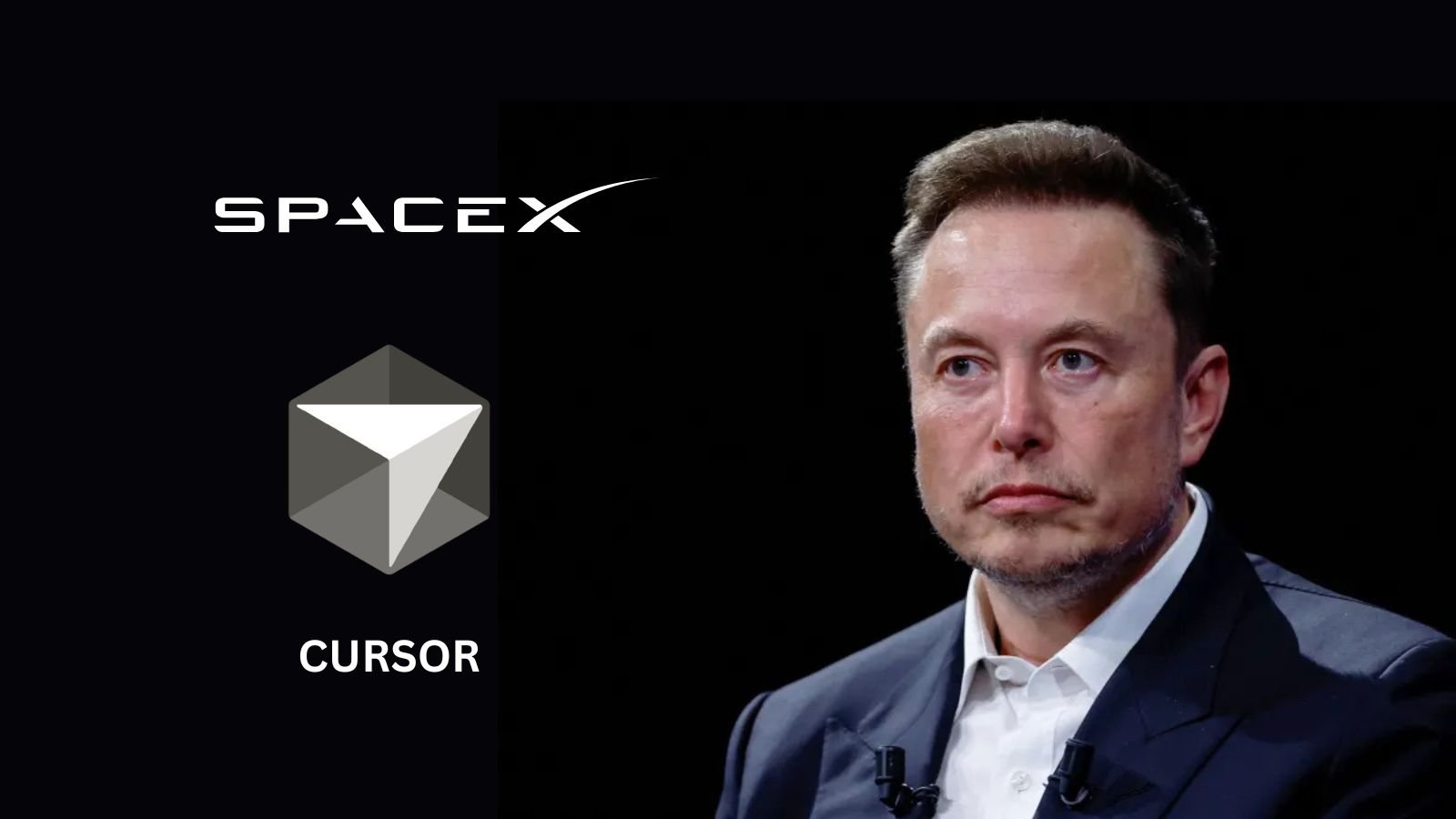
We’re talking about SpaceX dropping $60 billion in stock to buy Cursor, an AI coding startup, just days after its blockbuster IPO. This isn’t just Elon Musk throwing money around. This is a strategic move that reveals exactly where the real battle for AI supremacy is being fought.
And the battle isn’t about rockets. It’s about code.
The Billion-Dollar Deal of SpaceX
Here’s the thing nobody’s really talking about. Cursor was already on fire before SpaceX came knocking. We’re talking a startup founded by four MIT students in 2022 that was generating over $1 billion in annualized revenue by the end of 2025. Nvidia’s CEO called it his “favorite enterprise AI service.”
So why sell? Money wasn’t the issue. Cursor was about to close a $2 billion funding round that would have valued it above $50 billion.
The real answer is simpler and more brutal: compute power.
Cursor said it outright in April when the partnership was first announced – they were “bottlenecked by compute.” They had the product, the customers, and the hype. But they couldn’t scale their model training because they didn’t have enough processing power. That’s like having a Ferrari with no gas.
SpaceX, through its xAI division, has Colossus – the largest supercomputer cluster in the world, based in Memphis. We’re talking a million H100-equivalent chips. When you have that kind of infrastructure, you can do things smaller players simply can’t.
We’ve wanted to push our training efforts much further, but we’ve been bottlenecked by compute. – Cursor’s April blog post
Why This Deal Happened Now
The timing here is everything. SpaceX just went public on the Nasdaq in the biggest IPO in history. They raised $85.7 billion. And then, days later, they pull the trigger on this acquisition.
Let me break down why this matters. Before the IPO, SpaceX had already merged with xAI (Musk’s AI company). In their IPO prospectus, they told investors they’re looking at a total addressable market of $28.5 trillion. And get this – **$26.5 trillion of that comes from AI**.
Think about what that means. SpaceX isn’t a rocket company that also does AI. It’s an AI company that also happens to build rockets.
By using newly public stock as currency, SpaceX can acquire Cursor without spending cash. And because their stock price surged nearly 50% from the $135 IPO price, Cursor’s shareholders are getting a pretty sweet deal too. Everybody wins.
The Strategy Behind the Purchase
What SpaceX is building here is a vertical AI empire. They’re combining:
- The hardware: Colossus supercomputer
- The models: xAI’s Grok
- The application: Cursor’s AI coding assistant
SpaceX said it plainly in their prospectus: they want to “vertically integrate compute infrastructure, models, and applications.” Cursor gives them the application layer – the actual product that millions of developers are already paying for.
We consider software development as a strategically important use case for AI given its combination of high-quality structured data, rapid feedback cycles, and frequent, mission-critical usage. – SpaceX prospectus
This matters because AI needs constant, real-world feedback to improve. Every time a developer uses Cursor, they’re generating data that makes the AI smarter. SpaceX wants that feedback loop feeding directly into Grok.
What This Means for the AI Race
Let me be honest with you. This deal changes the dynamics of the AI industry in a few ways.
First, it gives SpaceX a massive head start in enterprise AI. While companies like Anthropic and OpenAI are fighting over consumer chatbots, SpaceX is buying a tool that’s already embedded in thousands of companies including Stripe, Adobe, and Nvidia.
Second, it shows that the “winner” in AI won’t necessarily be the company with the smartest model. It’ll be the company that can combine compute, data, and distribution most effectively. SpaceX now has all three.
Third, and this is the part that fascinates me – this validates the “vibe coding” trend. For those who haven’t heard the term, it was coined when a prominent AI researcher used Cursor’s Composer feature for weekend projects. The idea is that AI is getting so good at coding that even non-programmers can build software. SpaceX just bet $60 billion that this trend is real and growing.
The Risks Nobody’s Talking About
I wouldn’t be doing my job if I didn’t point out the potential downsides here.
xAI has had a rough run. All 11 of Musk’s co-founders at xAI had left by the end of March. Musk admitted publicly that xAI “was not built right the first time around.” And Grok has been controversial to say the least – from allowing deepfakes to calling itself “MechaHitler.” SpaceX faces legal challenges over these issues.
The cost is staggering. SpaceX posted a $4.94 billion net loss last year, and capital expenditures nearly doubled to $20.7 billion, largely driven by AI. This acquisition adds more pressure to deliver.
Integration is hard. Merging a fast-moving startup culture with a massive aerospace company isn’t easy. And with two senior Cursor engineers already jumping to xAI before the deal, there are questions about how smooth this transition will be.
What This Means for the Rest of Us
Here’s what I want you to take away from this. When a company goes public, raises $85 billion, and immediately spends $60 billion on an AI startup, they’re telling you something.
They’re telling you that the future isn’t about rockets. It’s about the software that runs them.
SpaceX is betting that whoever controls the tools that write code will control the future of technology. And they just made sure they own the best one out there.
Whether this pays off or becomes a cautionary tale depends on how well they can execute. But one thing’s certain: the AI race just got a lot more interesting.

Cody Scott
Cody Scott is a passionate content writer at AISEOToolsHub and an AI News Expert, dedicated to exploring the latest advancements in artificial intelligence. He specializes in providing up-to-date insights on new AI tools and technologies while sharing his personal experiences and practical tips for leveraging AI in content creation and digital marketing
Discover more from AI News Hub
Subscribe to get the latest posts sent to your email.