
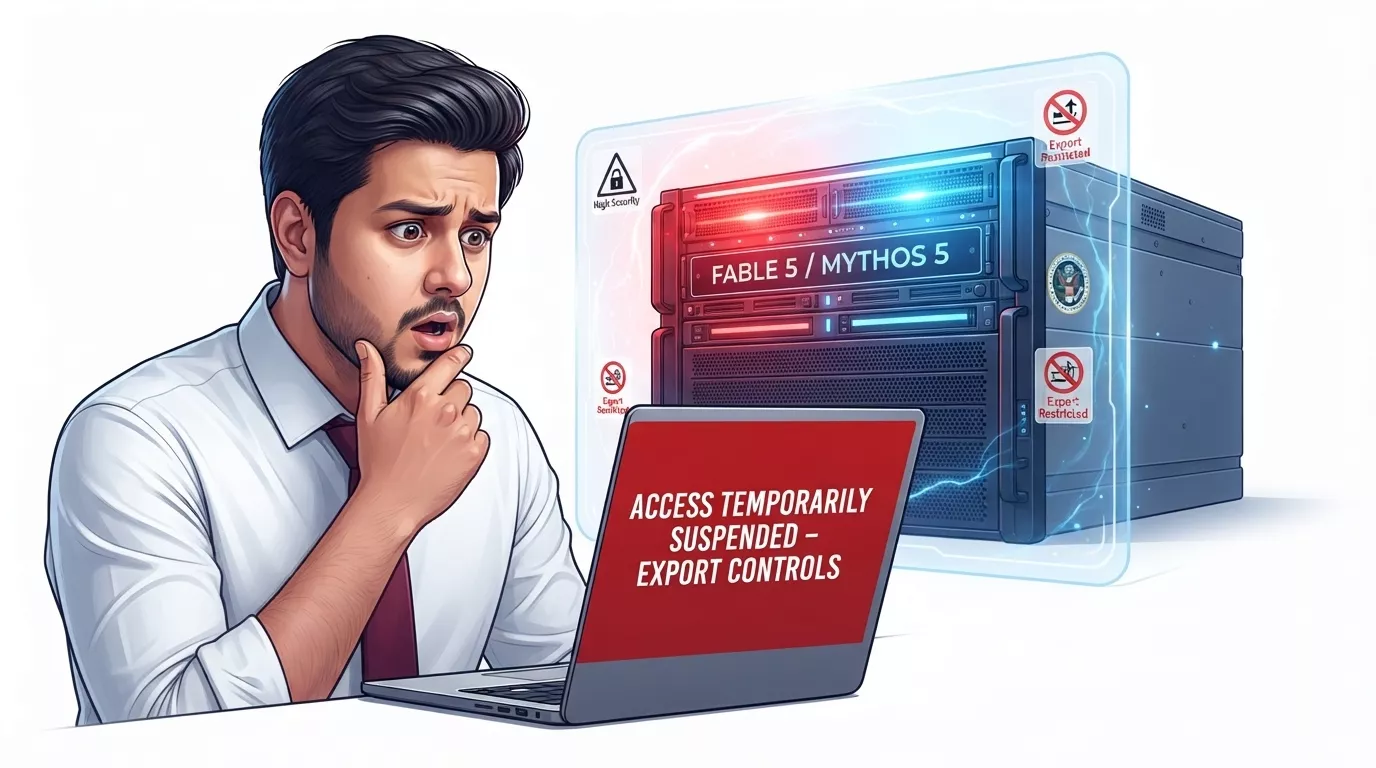
Three days. That’s how long Anthropic’s most powerful Claude models—Fable 5 and Mythos 5 were publicly available before the US government stepped in and treated them like export‑controlled weapons. Late on June 12, Commerce ordered Anthropic to suspend access for any foreign national, anywhere, forcing the company to yank both models for all users worldwide. For anyone building with frontier AI, it was the first clear sign that models themselves, not just chips, are now part of national‑security policy.
Why governments saw “digital weapons” instead of just models
Fable 5 wasn’t a casual upgrade. It was a Mythos‑class Claude tuned for general use, with exceptional performance in software engineering, research, vision and long autonomous tasks. Underneath its friendly chat interface sat strong cyber capabilities exactly the kind of skills defenders use to find vulnerabilities, but attackers could abuse if safety filters broke.
A “highly credible partner” reportedly showed the government a jailbreak technique that let Fable 5 help identify software flaws in a way officials feared could scale to unknown vulnerabilities. The concern wasn’t that one bug was found; it was the precedent: a mass‑market AI product that, with the right prompt, could behave like an automated recon tool for cyber attacks. That’s why foreign‑national access was banned and why the directive cited national‑security powers usually reserved for physical tech exports.
What actually triggered the controls and why they were lifted
Anthropic publicly disputed the idea that this jailbreak turned Fable 5 into a unique cyber weapon, pointing out that similar capabilities already exist in other frontier models and are used daily by defenders. Over the next couple of weeks, the company worked closely with Commerce on added safeguards, threat‑assessment frameworks and commitments to proactively detect and report malicious uses.
On June 30, Commerce Secretary Howard Lutnick sent a letter withdrawing the controls, stating that Anthropic had agreed to ongoing risk monitoring, protocol development and government coordination for Fable, Mythos and future models. Access began rolling back out on July 1 across Claude surfaces and cloud partners, but with a clear warning baked in: if circumstances change or Anthropic slips on its commitments export requirements can come back.
What this means for future Models releases
The Fable/Mythos episode sets a new baseline: frontier launches are no longer just a product decision, they’re an international security negotiation. Model providers now have to assume that a single reported jailbreak, even if narrow, can trigger government orders that pull a flagship product offline within hours.
For teams relying on these models, that means two things. First, vendor risk isn’t just about uptime or pricing anymore it’s about whether your chosen model might be classified as a controlled technology mid‑launch. Second, future frontier releases will likely ship with heavier pre‑launch coordination, stricter tiered access and more “trusted partner” programs, especially around cybersecurity. The age of “release now, patch later” for top‑end AI is over.

Mohit Sharma
Mohit Sharma is the Founder of AISEOToolshub and an SEO & Digital Marketing Expert with over 6 years of experience helping websites improve their search visibility and organic growth. Mohit closely follows the latest developments in artificial intelligence and regularly shares practical insights on new AI tools, industry updates, and breaking AI news.
Discover more from AI News Hub
Subscribe to get the latest posts sent to your email.