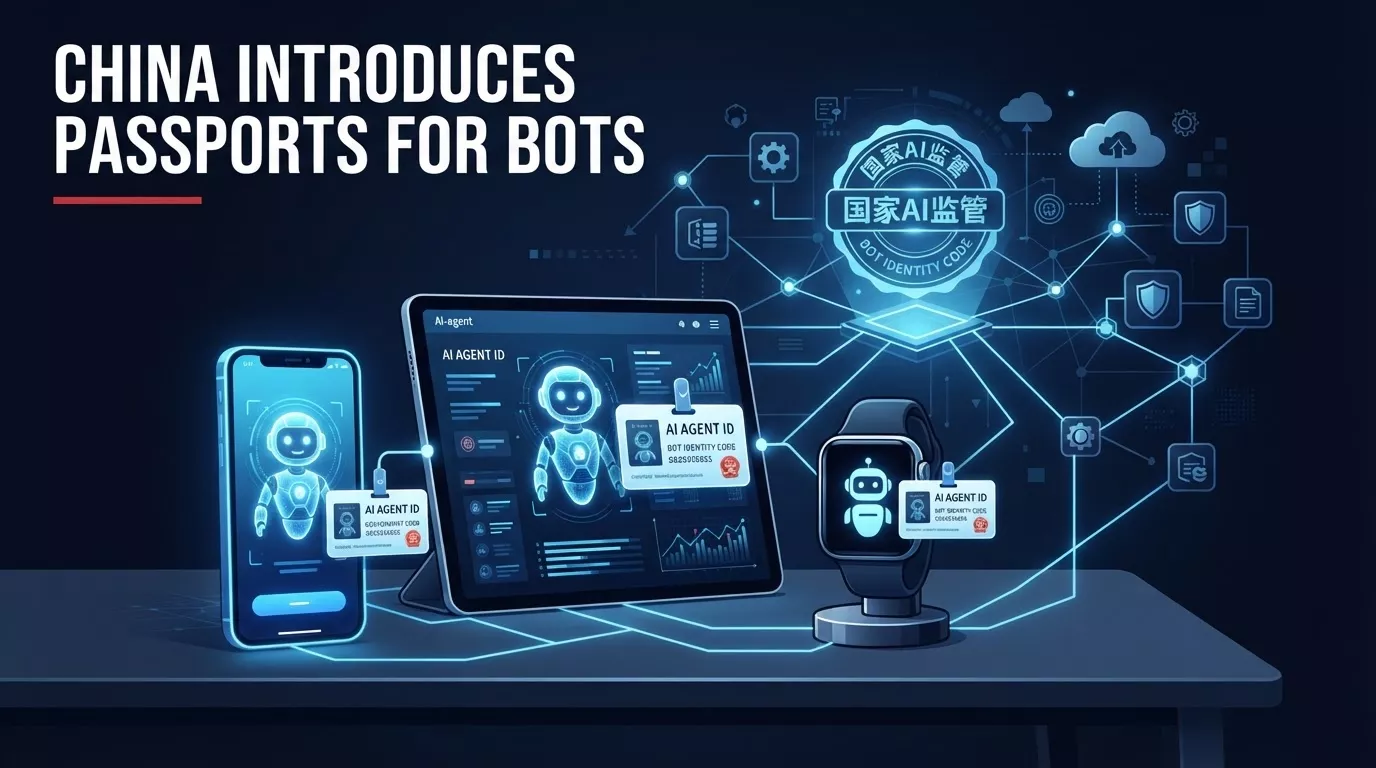
China has introduced regulations which will require phones, tablets and wearables to meet new standards around security, compatibility and fraud prevention before they can be connected to a network if they have AI agents pre-installed. This effectively gives AI agents an identifiable ‘passport’.
The notice titled Notice on Strengthening the Network Access Management of Intelligent Agent Terminal Devices was signed on the 24th October and published on the 6th November. This regulation applies to devices with pre-installed AI Agents.
China Introduces “Passports for Bots”: New Requirements Globally
Manufacturers will need to ensure the following:
AI agents must be compatible with the device they are pre-installed on. This means they must pass tests around permissions, communication, network and data security and task performance.
Devices must pass risk assessments around fraud and anti-fraud. This is due to increasing concerns around using AI agents for scams, phishing and unauthorised financial activity.
AI agents must have a unique ID code based on the national standards of AI agent interconnectivity in China. This is the most likely thing to impact how AI agents are developed globally.
What an AI-Agent Identity Code Means
This acts as a digital fingerprint for the AI agent. It allows regulators to know what version of the AI agent was used, who developed it and what device it was on.
This makes it easier to identify malicious or incorrect AI agents. It also provides accountability if an AI agent causes harm. Regulators can also monitor what updates are being made.
This could provide more transparency for the user around what AI agent is being used on their devices. For developers it means they will need to create AI agents with an identifiable ID.
How This Affects OTA Updates
One of the most impactful parts of this notice is the rules around Over The Air (OTA) updates. Manufacturers will no longer be able to make changes to the AI agent without being noticed.
If there are any major updates to the AI agent they must be reported to MIIT. Manufacturers must provide information around when it will happen, how many people it will affect, what user groups and business scenarios it will affect, security and anti-fraud measures. After being assessed by experts they can then be sent out to users.
This essentially means there will be a two step process for manufacturers. First to get the device approved and then each time there is a major update to the AI agent.
What it means for App Developers
Developers must now provide explicit consent to being called by AI agents. If they do not provide consent then the AI agent will not be able to gain access to the app.
This is a significant change. It means that AI agents cannot call apps without the developers consent. This reduces the risk of unauthorised data access or unexpected actions. App stores will also need to show what AI agents are compatible with what devices. Any AI agents that do not pass compatibility tests will need to be removed.
How China’s AI Agent IDs Could Affect Global Platforms
This is significant as it means compliance with AI agents is being enforced through hardware. AI is no longer being regulated at a software or service level but instead the AI agent must be compliant for the device to legally connect to networks in China.
This could influence how other countries regulate AI agents. If ID codes, fraud prevention and OTA monitoring become standard then global manufacturers may need to create devices and AI agents with higher requirements.
For companies creating AI agents it means they will need to ensure they are identifiable, secure and have user consent.

Mohit Sharma
Mohit Sharma is the Founder of AISEOToolshub and an SEO & Digital Marketing Expert with over 6 years of experience helping websites improve their search visibility and organic growth. Mohit closely follows the latest developments in artificial intelligence and regularly shares practical insights on new AI tools, industry updates, and breaking AI news.
Discover more from AI News Hub
Subscribe to get the latest posts sent to your email.