
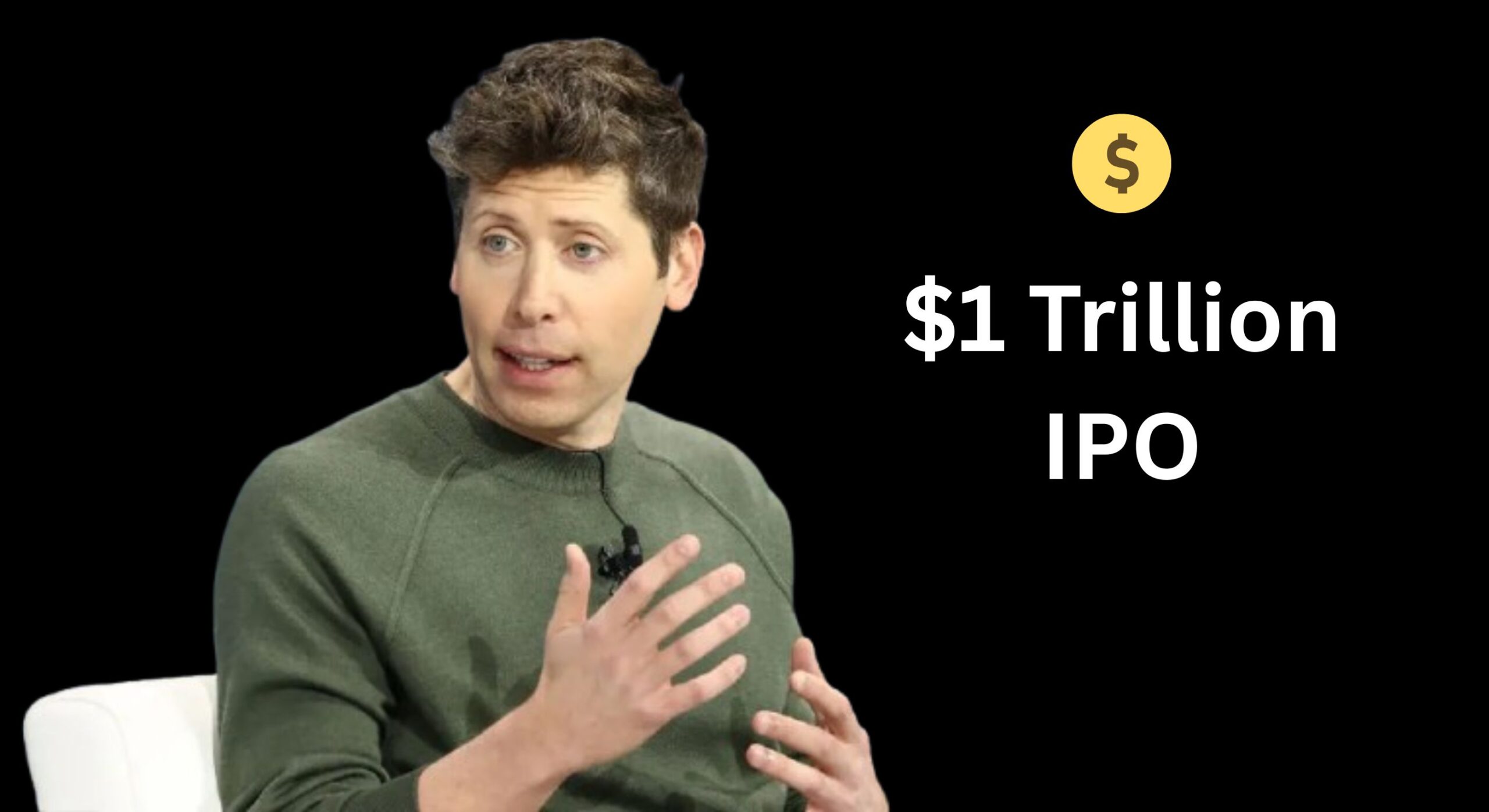
OpenAI is making $25 billion a year. It’s also losing $14 billion a year. It wants to go public at a $1 trillion valuation. And it won’t actually turn a profit until 2030 at the earliest.
All four of those sentences are true — at the same time. Welcome to the most fascinating and terrifying IPO story in the history of business.
The Numbers That Will Make You Do a Double Take
Let’s start with the good news, because it genuinely is staggering.
OpenAI crossed $25 billion in annualised revenue in February 2026 — up from $21.4 billion at the end of 2025. That’s a 17% jump in roughly six weeks. No company at this scale has ever grown revenue this fast in recorded business history. It’s being driven by three engines: ChatGPT subscriptions, enterprise API contracts, and a booming B2B business as companies replace entire software stacks with AI.
Sam Altman has publicly said he expects revenue to hit $100 billion by 2027. Most analysts who’ve looked at the trajectory aren’t laughing at that number anymore.
Now the Part That Keeps Investors Up at Night
Here’s where it gets complicated — and this is the part most headlines aren’t telling you clearly.
OpenAI is burning through money at a rate that is genuinely hard to comprehend. The company is projected to lose $14 billion in 2026 alone — nearly triple its losses from the year before. By 2027, its annual burn rate will reach $57 billion. To put that in perspective, $57 billion a year is more than the total annual revenue of most Fortune 500 companies — and OpenAI will spend that in a single year before earning back a single dollar of profit.
Deutsche Bank analysts put it even more bluntly — they’ve estimated OpenAI will accumulate $143 billion in total losses between 2024 and 2029. That’s the largest startup loss run in history, by a significant margin.
So where is all this money going? Compute, mostly. Training frontier AI models at GPT-5.4 level costs hundreds of millions per run. Running inference for hundreds of millions of ChatGPT users costs hundreds of millions more every single month. OpenAI pays a significant chunk of that directly to Microsoft Azure, and increasingly to AWS and Oracle as well.
Why The IPO Still Makes Sense — Even With All of This
Here’s the part I think most people are missing when they see these numbers.
OpenAI doesn’t need to be profitable to go public. It needs to convince public markets that it will be. And the story it’s telling isn’t crazy. The company raised $110 billion in February 2026 at a pre-money valuation of $730 billion. Goldman Sachs and Morgan Stanley are already in early underwriting discussions. CFO Sarah Friar has reportedly told advisors the company is targeting a public listing in 2027, with a possible filing as early as Q4 2026.
Microsoft owns roughly 27% of OpenAI PBC following last year’s restructuring — meaning a $1 trillion IPO would value Microsoft’s stake alone at $270 billion. That’s why Microsoft hasn’t blinked. That’s also why SoftBank, Thrive Capital, and Abu Dhabi’s MGX have poured money in at increasingly staggering valuations.
The IPO isn’t just about raising cash. It gives OpenAI the ability to make large acquisitions using public stock and removes the ceiling on how much capital it can access. In a race where compute = capability = market share, unlimited capital access is the real prize.
My Opinion on This — This Is Either the Greatest Bet Ever Made or the Greatest Bubble Since 2000
I’ll be honest with you — every time I look at these numbers from a traditional finance lens, alarm bells go off. A company losing $14 billion a year, asking to be valued at $1 trillion, with profitability targets pushed to 2030? In any other industry, that would be a red flag parade.
But here’s why I think the OpenAI story is genuinely different from the dot-com bubble comparisons people are reaching for.
OpenAI isn’t building a website hoping ads will one day work. It’s building infrastructure that is actively replacing human labour across legal, medical, software, finance, and creative industries simultaneously. Its revenue growing 17% in six weeks — at $25 billion scale — is the market telling you that the demand for this technology is real, urgent, and accelerating.
What concerns me more is the competitive picture. Anthropic just hit $19 billion in annualised revenue and is reportedly winning 73% of new enterprise AI contracts — up from 50% just two months ago. If Anthropic keeps taking enterprise share while OpenAI funds a $57 billion burn rate, the IPO math gets harder to defend to public market shareholders who don’t have the same risk appetite as SoftBank.
The $1 trillion IPO will happen. Whether the valuation holds six months after listing is the question nobody in Silicon Valley wants to answer right now.
What This Means for You as a ChatGPT User
If you’re using ChatGPT today, the IPO pressure is already quietly shaping your experience. OpenAI’s pivot to coding tools and enterprise users — announced just last week — is a direct response to needing revenue that justifies a trillion-dollar public valuation. Expect API prices to come under pressure post-IPO as public shareholders demand margin improvement. Expect the free tier of ChatGPT to get more restricted. And expect the product roadmap to increasingly favour enterprise features over consumer ones.
The OpenAI that goes public will look noticeably different from the one that launched ChatGPT in 2022. More focused. More corporate. More profitable — eventually. Whether it’s still as exciting to use is a different question entirely.

Cody Scott
Cody Scott is a passionate content writer at AISEOToolsHub and an AI News Expert, dedicated to exploring the latest advancements in artificial intelligence. He specializes in providing up-to-date insights on new AI tools and technologies while sharing his personal experiences and practical tips for leveraging AI in content creation and digital marketing