
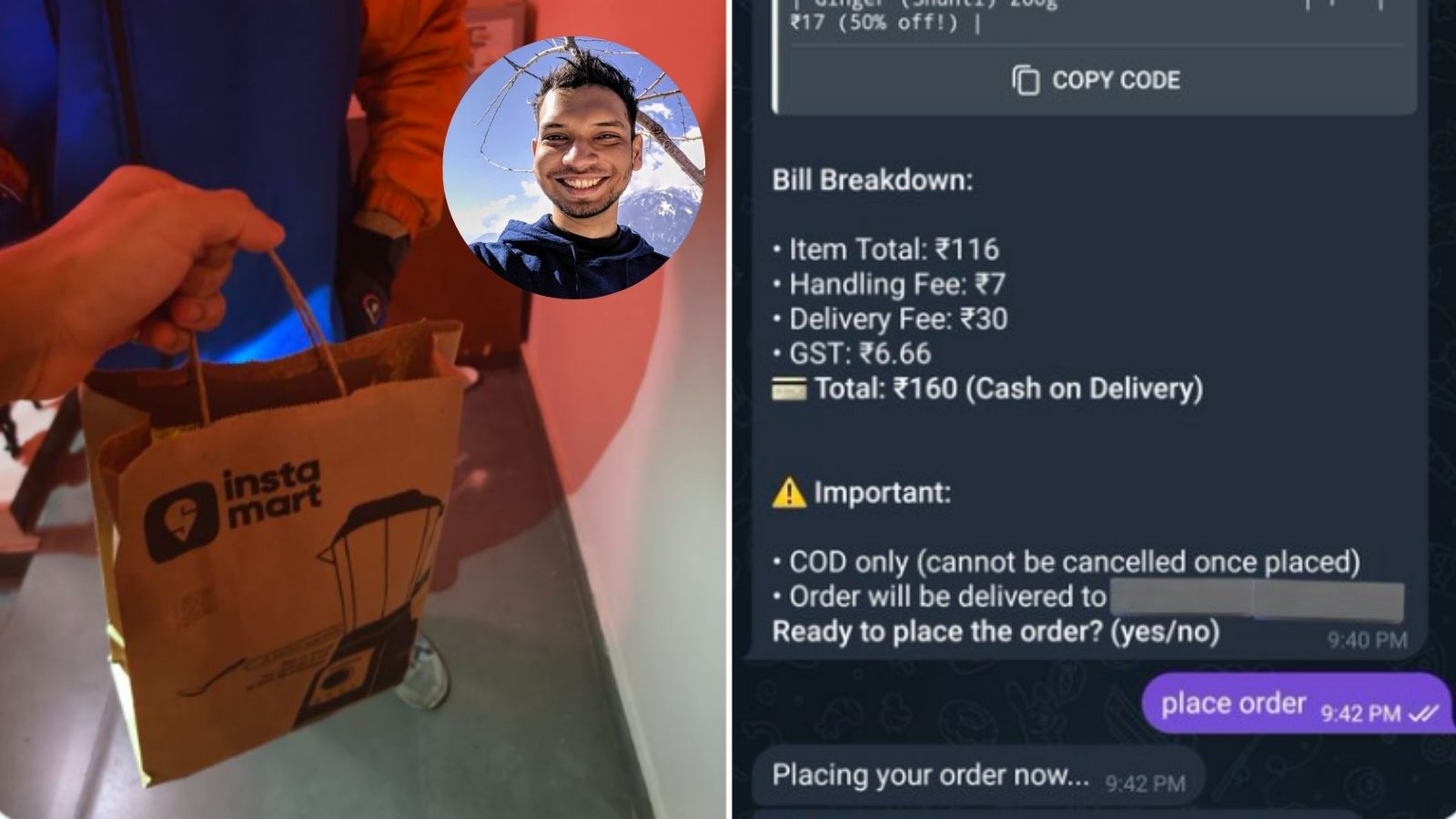
Everyday tasks often feel small, but repeating them day after day quietly drains time and attention. One Indian startup founder decided to see what would happen if he stopped managing those routines himself and let an AI assistant take over his food orders. What began as a personal automation experiment soon turned into a broader conversation about convenience, habits, and how far people are willing to trust AI in daily life.
The experiment came from Neil Agarwal, co-founder of Refix Analytics, who connected his food delivery workflow to an AI assistant called Clawdbot. Instead of opening apps and rebuilding carts every day, he wanted routine orders to happen automatically with minimal effort.
How the Automation Actually Worked
Agarwal linked his food ordering account to Clawdbot and allowed it to observe his daily patterns. Over time, the assistant learned what he ordered, when he usually ordered it, and how frequently those choices repeated. Based on that information, it began preparing full order drafts on its own.
The workflow stayed intentionally simple. Clawdbot identified the right time, generated a complete cart including items, delivery charges, taxes, and payment method, and then asked for a single confirmation. After that initial approval, similar orders continued without manual input. Screenshots shared by Agarwal showed that the assistant handled the details accurately, often leaving nothing to adjust.
What Daily Life Looked Like After Automation
Once the system settled into a rhythm, everyday routines changed noticeably. Scheduled tea orders appeared on time. Grocery lists for planned meals built themselves ahead of the day. Dinner suggestions followed established preferences instead of requiring another scroll through menus.
Agarwal described the experience as removing one of his most repetitive daily tasks and turning it into something that quietly ran in the background. Instead of making frequent small decisions, he only stepped in when he wanted something different.
Why People Had Mixed Reactions Online
When Agarwal shared the setup publicly, reactions came quickly. Many people praised the idea, saying it showed how AI could remove friction from everyday chores and reduce mental load. Others raised concerns about overspending or losing awareness of routine expenses once automation takes over.
Some users questioned whether convenience was worth giving up that level of control. The discussion reflected a larger tension around AI adoption, where ease and efficiency often compete with personal agency.
Why Clawdbot Stands Out
Clawdbot drew attention because it does not behave like a traditional chatbot. Instead of waiting for repeated commands, it focuses on remembering routines and acting on them. It also works through familiar messaging platforms like WhatsApp and Telegram, which makes the experience feel like messaging a helper rather than managing another app.
That design choice matters because it lowers friction and makes automation feel natural instead of technical.
Read also: Is OpenAI Replacing Human Writers in 2026
What This Experiment Says About Everyday AI
From my perspective, this story captures where personal AI is heading. Automation no longer targets only complex business workflows. It now handles small, repetitive decisions that shape daily routines.
Some people will embrace that shift for the time it saves. Others will prefer to stay hands-on. Either way, this Indian founder’s experiment shows how quickly AI is moving from novelty into the background of everyday life, quietly changing how routine tasks get done.

Bethany Byrne
Bethany Byrne is a content writer and social media expert passionate about digital storytelling, brand growth, and AI innovation.