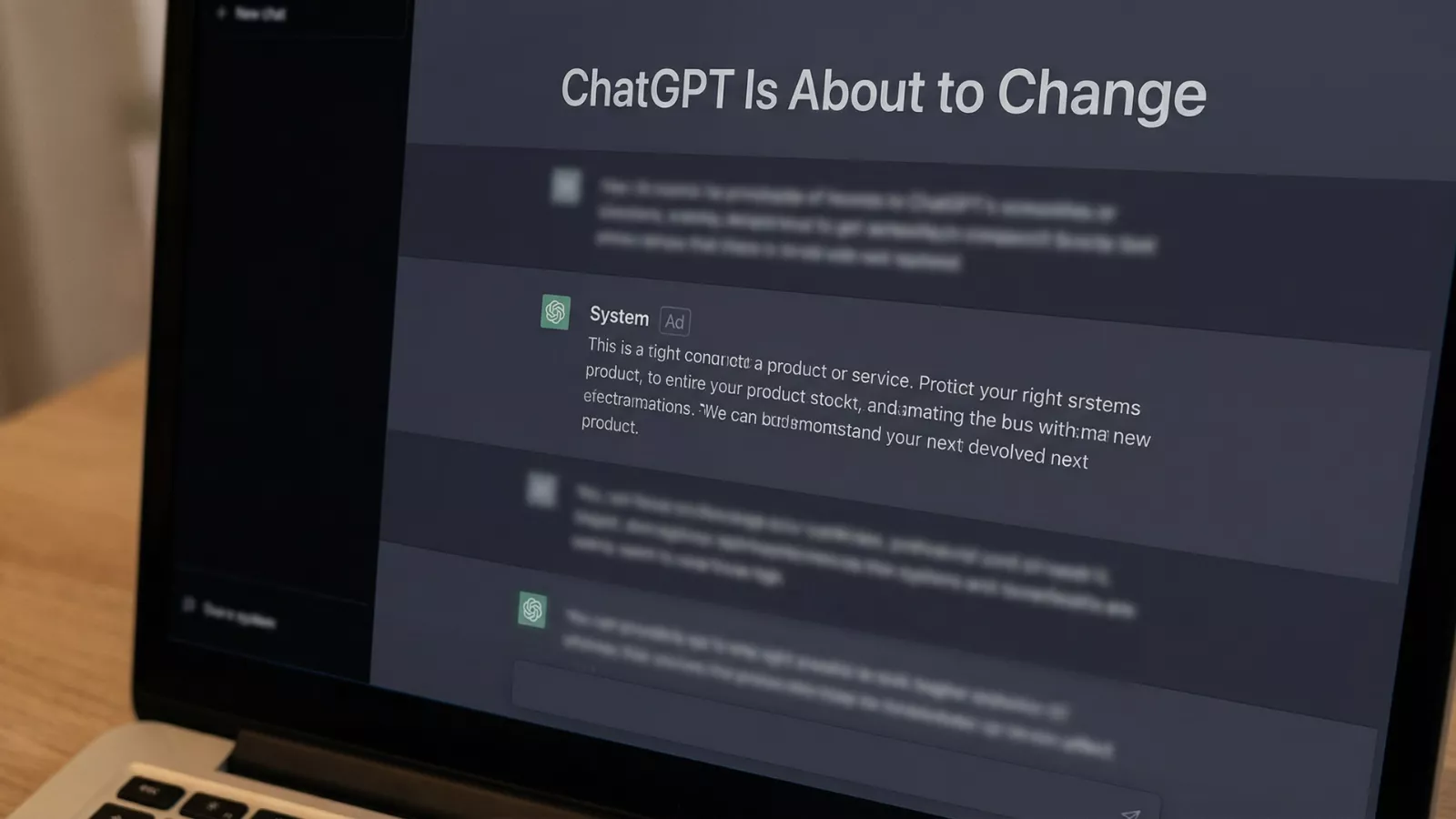
Something meaningful has changed around ChatGPT, and it is not just about pricing. Access to the platform is becoming more affordable, while signs are growing that advertising will eventually play a role in how the product operates. Together, these two shifts point toward a larger strategic change that affects how people may experience ChatGPT in the future.
For a long time, ChatGPT operated in a relatively clean environment. Users either paid for premium features or used a limited free version, and the interface stayed free from commercial influence. That balance now appears to be adjusting. Lower prices and wider availability suggest that ChatGPT is moving away from being a niche paid tool and closer to becoming a mass-market platform used daily by a much broader audience.
Why ChatGPT Is Becoming More Affordable
Competition across the AI space has intensified, and pricing has become an important lever. As more tools offer similar capabilities, keeping ChatGPT accessible matters as much as raw performance. OpenAI benefits when more people rely on ChatGPT regularly for writing, research, planning, and problem-solving, even if that means earning less per individual user.
Expanding the user base increases engagement, data, and long-term relevance. In that context, lowering costs is not a concession but a growth strategy that helps make ChatGPT part of everyday digital routines rather than an occasional premium service.
Why Advertising Is Entering the Conversation
Once a product reaches mass adoption, monetization tends to follow familiar paths. Advertising has supported search engines, social networks, and many other platforms that started without it. ChatGPT appears to be approaching that same crossroads.
Advertising inside an AI system would likely look different from traditional banner ads. It could take the form of sponsored suggestions, promoted tools, or recommended services that align with user queries. This subtlety is precisely why the idea makes some users uncomfortable, as it blurs the line between helpful responses and commercial influence.
Mixed Reactions From Users
Public reaction reflects both acceptance and concern. Some users see advertising as a reasonable trade-off for cheaper access and continued innovation. Others worry that introducing paid influence could affect the neutrality of responses, especially in sensitive areas such as shopping decisions, finance, or health-related questions.
The deeper concern is not advertising itself but trust. Users want to know whether answers are driven by usefulness or by sponsorship.
What This Means Going Forward
From my perspective, this shift suggests ChatGPT is transitioning from an experimental AI product into a large-scale consumer platform. Cheaper access helps it reach more people, while advertising provides a way to support the costs of operating at that scale.
This change does not signal decline, but maturity. ChatGPT is stepping into the same economic realities that have shaped every major digital platform before it, and how carefully this transition is handled will likely define user trust in the years ahead.

Cody Scott
Cody Scott is a passionate content writer at AISEOToolsHub and an AI News Expert, dedicated to exploring the latest advancements in artificial intelligence. He specializes in providing up-to-date insights on new AI tools and technologies while sharing his personal experiences and practical tips for leveraging AI in content creation and digital marketing