I’ve been using Siri since 2011. Setting timers. Asking for the weather. Getting wrong answers about simple things. For over a decade, Siri was the running joke of the AI world — the assistant that could barely help you send a text without messing it up.
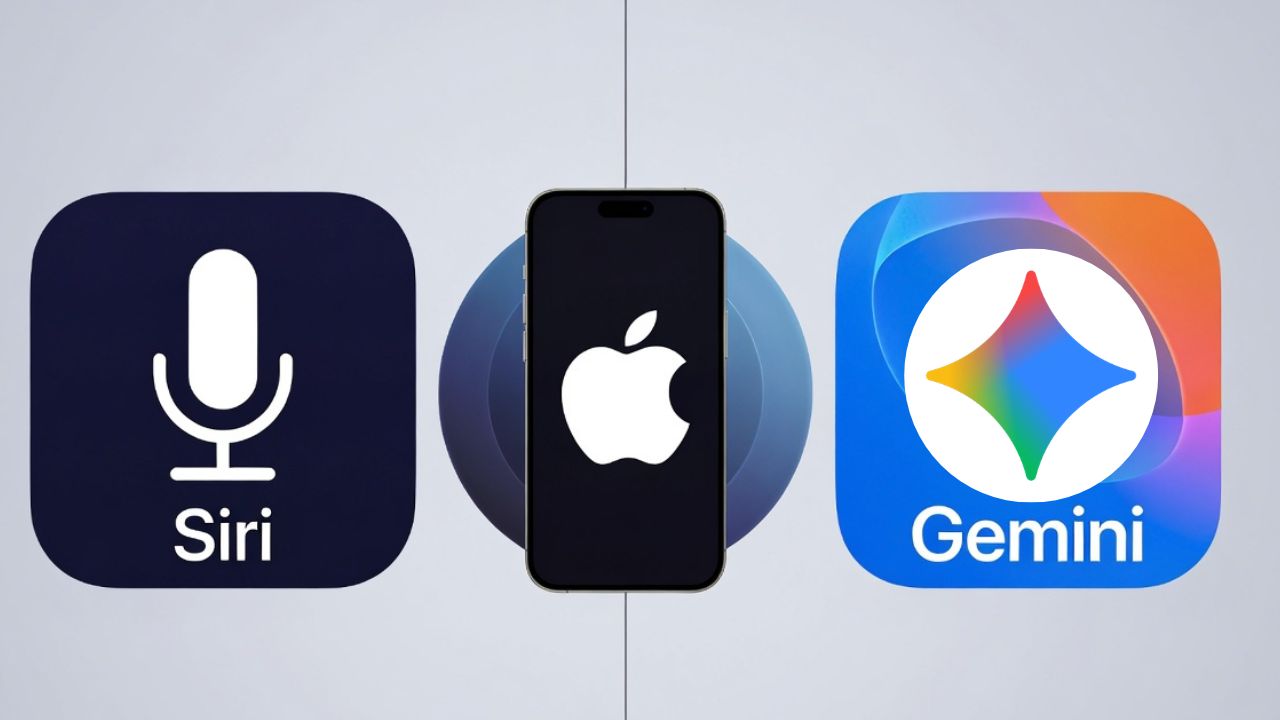
That era is officially over. And the reason why is something nobody expected — Apple gave up building its own AI and went straight to Google.
Here’s What Actually Happened Between Apple and Google
On January 12, 2026, Apple and Google made a quiet announcement that sent shockwaves through the entire tech industry.
Apple officially signed a multi-year deal to use Google’s Gemini AI models — a 1.2 trillion parameter system — as the new brain behind Siri. Not as a chatbot add-on. Not as an optional plug-in. As the actual foundation of how Siri thinks, reasons, and responds going forward.
In a joint statement, Apple said: “After thorough assessment, we concluded that Google’s AI technology offers the most capable foundation for Apple Foundation Models.”
Translation? Apple tried to build its own AI for years. Burned billions. Fell behind. And then made the smartest business decision it could — partnered with the best.
The deal reportedly costs Apple close to $1 billion per year. And the moment it was announced, Google’s market cap crossed $4 trillion — surpassing Apple for the first time since 2019. That’s how big this is.
What the New Siri Will Actually Do for You
This isn’t a voice speed upgrade or a prettier interface. This is a completely different product. Here’s what you’re getting when the new Siri arrives:
- Siri will actually understand context — you can say “play that podcast my friend sent last week” and it will search your messages, find it, and play it. No app switching. No copy-pasting.
- Emotional intelligence — if you tell Siri you’re feeling lonely or overwhelmed, it responds with actual empathy and helpful suggestions, not a search result
- Cross-app memory — Siri will remember what you were doing across different apps and pick up where you left off
- Conversational answers like Gemini — instead of reading out a Wikipedia snippet, it gives you a full, natural, context-aware response
- Task completion — tell Siri to “create a notes document about my meeting ideas” and it does it in Apple Notes directly
- Better when it doesn’t understand — the new Siri handles unclear questions intelligently instead of just failing silently
All of this runs through Apple’s Private Cloud Compute — which means your personal data stays encrypted and never used to train Google’s models. Apple kept its privacy commitment intact.
When Does This Actually Reach Your iPhone
Here’s the honest timeline. The first early features land with iOS 26.4, which is targeting a spring 2026 release — March or April. But the full, complete new Siri experience — the one with deep personal data access, cross-app memory, and full conversational mode — is coming with iOS 27 in June 2026.
One feature Apple is reportedly pushing back beyond iOS 26.4 is the expanded personal data access — where Siri can dig into your texts, emails, and files to answer questions. That one is slipping to iOS 26.5 according to Bloomberg’s Mark Gurman. So a phased rollout is what you should expect.
Your iPhone is compatible if you’re running an iPhone 15 or later with iOS 26 installed.
My Opinion on This — Apple Just Admitted Something Important
I find this story fascinating for a reason most people are glossing over.
Apple has always been the company that does everything in-house. Custom chips. Custom software. Custom everything. That independence is literally the foundation of how Apple has built its brand and its moat for 30 years.
And then they looked at what their own AI team had produced — and quietly walked over to Google.
I’m not saying that’s a failure. I actually think it’s the opposite. It takes a lot of confidence to look your $3 trillion ego in the mirror and say “our users deserve better than what we’re building.” That’s a mature, user-first decision. And it’s the right one.
But here’s what I think everyone is missing in this story — this deal is not just about Siri getting smarter. This is about two billion Apple devices suddenly running on Google’s AI infrastructure. That’s the largest single expansion of Gemini’s reach that has ever happened. OpenAI lost Apple’s default AI slot — and that is a massive strategic defeat they haven’t fully reckoned with publicly yet.
For you as an iPhone user, this is simply the best thing that has happened to Siri in its entire existence. But for the AI industry, this is a realignment that changes who holds power in this race.
Should You Be Excited?
Yes , with realistic expectations. The early iOS 26.4 update gives you a taste. The full experience arrives in June with iOS 27. The Siri you’ve been waiting for since 2011 is genuinely, finally coming. And this time, it’s not a promise. There’s a $1 billion per year contract behind it.

Cody Scott
Cody Scott is a passionate content writer at AISEOToolsHub and an AI News Expert, dedicated to exploring the latest advancements in artificial intelligence. He specializes in providing up-to-date insights on new AI tools and technologies while sharing his personal experiences and practical tips for leveraging AI in content creation and digital marketing